



Building Your Social Listening Maturity Part 1

Introducing the Social Listening Maturity Model
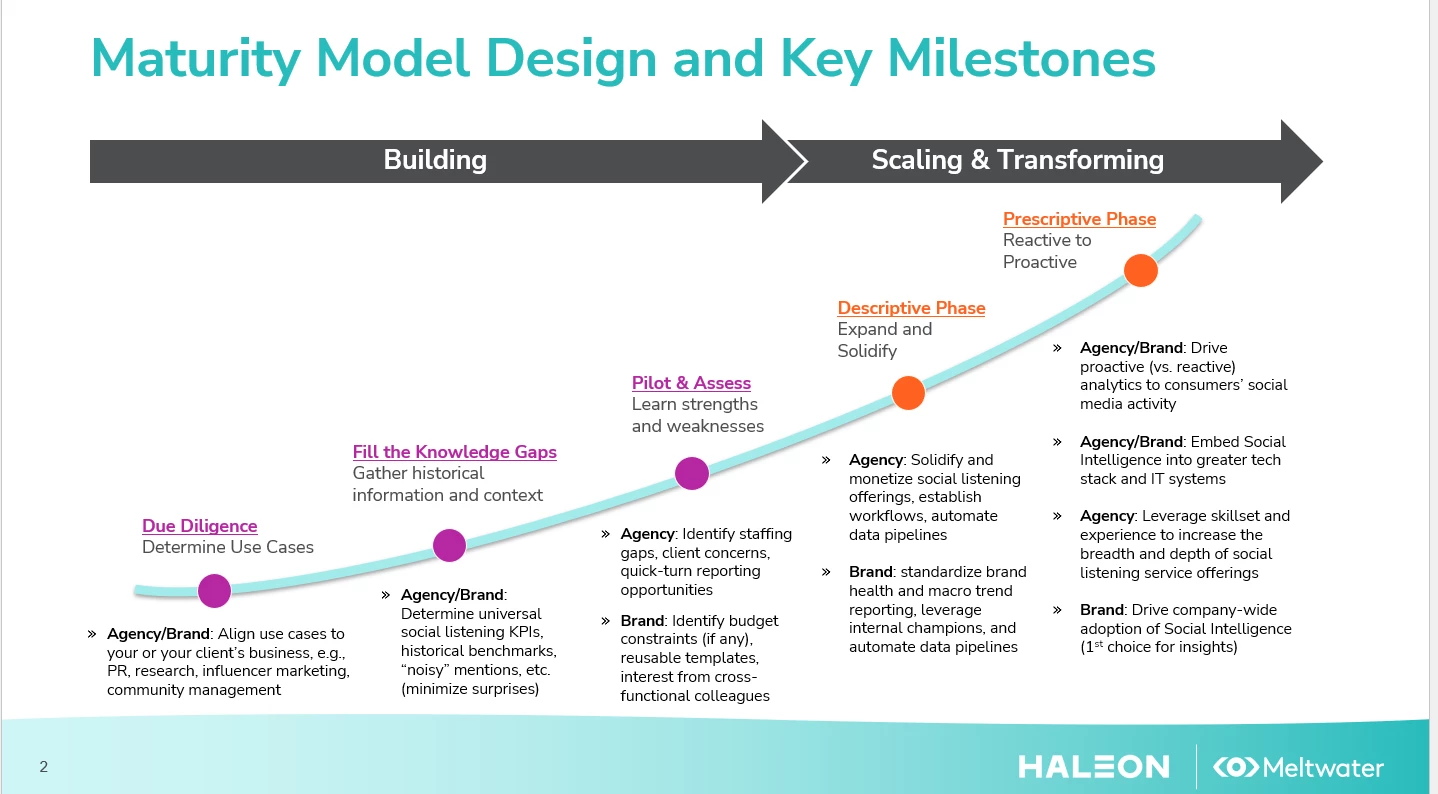
This week's focus is the Social Media Maturity Model. The model will help you answer the “where do I start?” question many of us face when tasked with building or leading a social listening team. I want to make sure we dive into each part and discuss what it means to your teams and businesses.
I’ll share my experience but would love to hear how the model fits within your organizational setup.
A model for every business type
I co-developed this model when I joined GSK, now Haleon. With no existing roadmap or set objectives, we needed a solid baseline and universal understanding of where we are as an organization, and where we want to be. That’s the biggest reason why I call our model a maturity model - it implies a process that takes time.
The first phase and one we will uncover this week represents the building of your social capacities. This is where we experiment and get things wrong. With time, and as we progress in our maturity level, we turn to scaling & transforming.
The model can be applied in varied environments - from small to medium businesses, to large-scale enterprises or agencies. Whilst every company’s journey will be different and unique - due to industry, products, and target audiences but also the skill set available - the building blocks I’ll introduce are relevant to all. The model can be applied to mature or immature organizations based on their use of social data analytics and tools. The most important thing is that you know which bucket you’re in.
You’re the first to see the model in this advanced stage! The first iterations were much more basic and I wanted to ensure we showcase our key learning, trial, and error of getting the model to where it is today. This should spare you a fair bit of time and budget!
The importance of building trust within the organization - and how to do it.
When setting up a social listening practice, many teams want to hit the ground running asap, neglecting research that needs to happen first. This in turn impacts how senior leadership views social intelligence as a whole. Data quality and integrity is how we build trust and demonstrate the unrivaled impact of consumer insights on the business. Get it right now, do the little things well and get people excited about the prospect!
With no previous use of social data within the organization, I needed a solid plan for the practice itself, but also a strategy on how I’ll educate the rest of the business on what’s to come. The model served that purpose extremely well. It demonstrated I know what I’m doing, it managed expectations and it allowed me to measure and report on success.
The beginnings - boolean, boolean, boolean
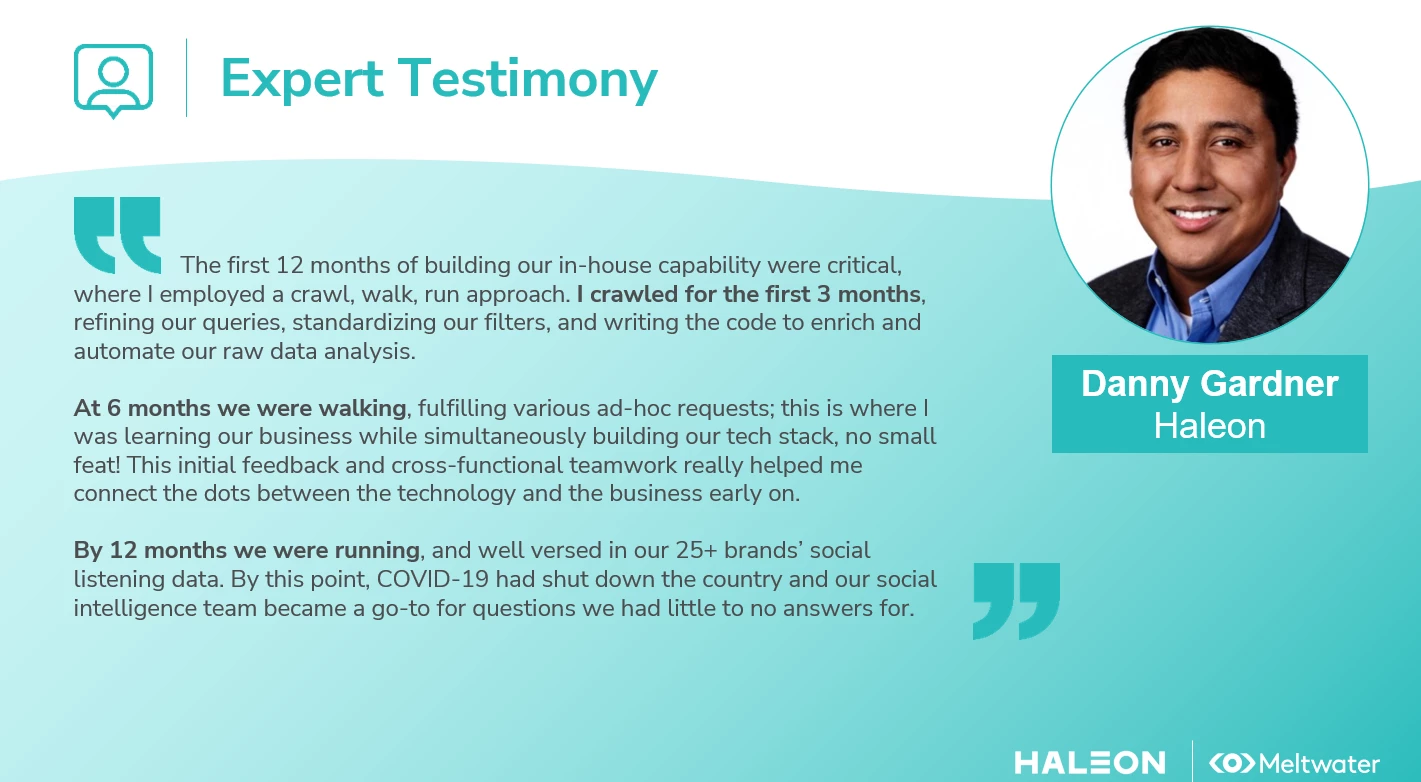
The first 12 months of building our in-house capability were critical. I employed a crawl, walk, run approach - it’s so important not to get ahead of ourselves at this stage! I crawled for the first 3 months, my focus was on refining our queries, standardizing our filters, and writing the code to enrich and automate our raw data analysis.
I set myself a goal to have all queries cleaned and in the system at a 6 months mark. I was able to do it in 4 months but it was no mean feat. Because of the work I did upfront, I spend less and less time cleaning the data now. We went from reviewing queries daily and weekly, to annual health checks. It wasn’t all smooth sailing but the approach has been tested over time and I’m confident in the model.
.
Tomorrow we dive in. We’ll focus on Due Diligence and determining use cases. Before we do, I’d love to hear from you. First thoughts on the maturity model? How did you go about building trust in data within your organization? Any lessons learned that would help the community?
ICYMI
Here is the full series: